GENESEE COUNTY HISTORICAL SOCIETY
  • Home
  • Explore
    • County Timeline
    • Our Stories
    • Links & Resources
    • Vintage Photos
  • Learn
    • About the Society
    • Preservation >
      • Ask the Archivist
      • Preservation Articles
    • Radio Show
    • "The Historian" Magazine Archive
  • Events
    • Upcoming >
      • Happy Birthday Billy 2025
    • Previous Events
  • Contribute
    • Volunteer
    • Financial Giving
  • Become a Member
  • The Market

Crossroads Village

Picture
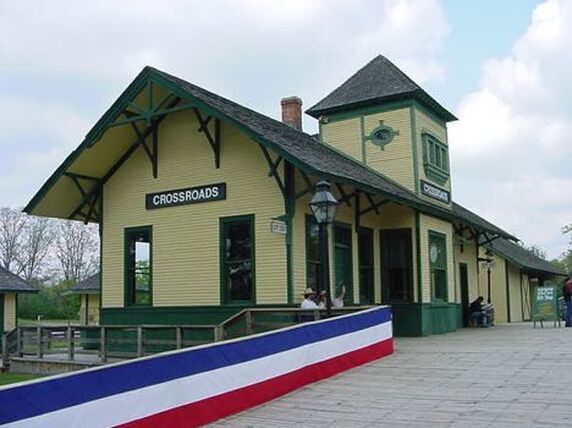
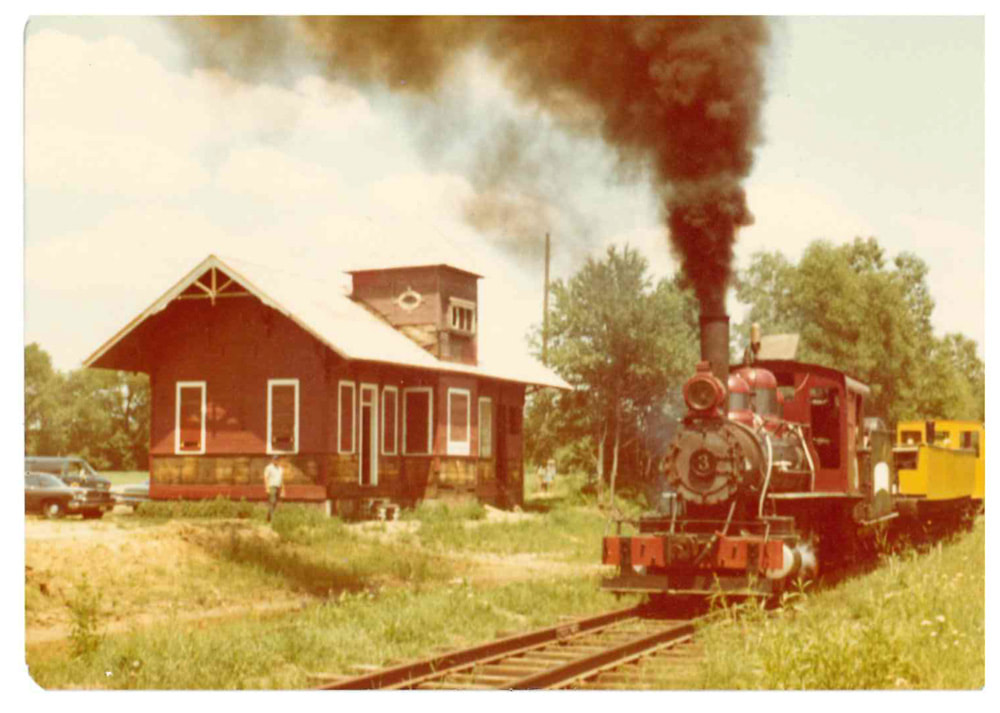
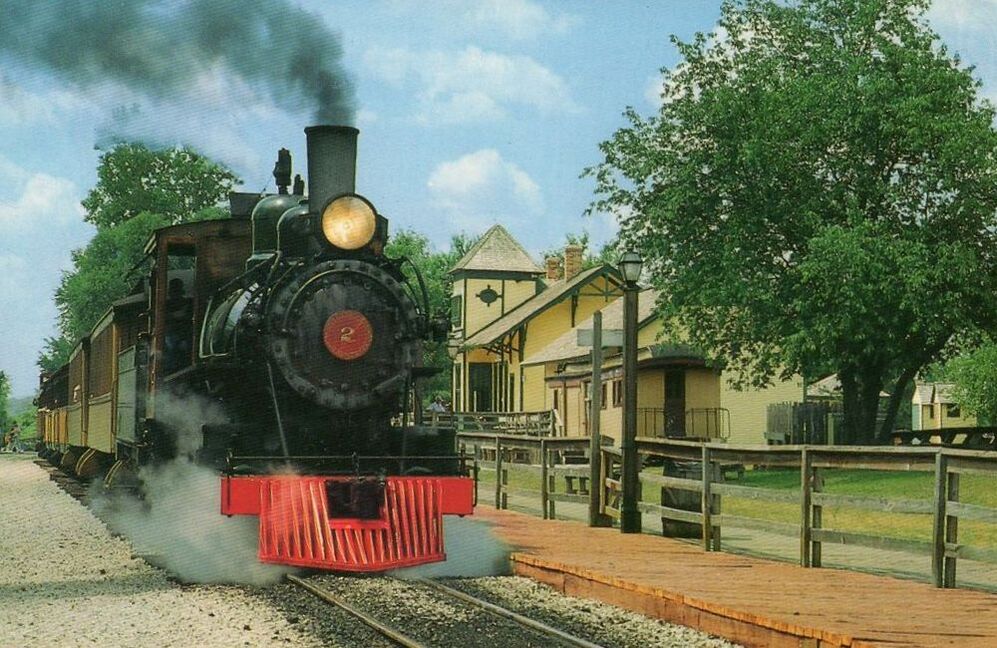
Huckleberry Railroad and the Davison Depot at the entrance of the Village (vintage Crossroads postcard)
Crossroads Village
Established 1974


A Walk Through Time

​Visiting Crossroads Village is like stepping into a time machine. This historical destination immerses you in a different era and way of life. The buildings, the people, the music, the culture and so much more, surround you. Crossroads Village is more than a just a tourist attraction, it was a successful mission to save some of the oldest pieces of Genesee County architecture.
​   
Picture
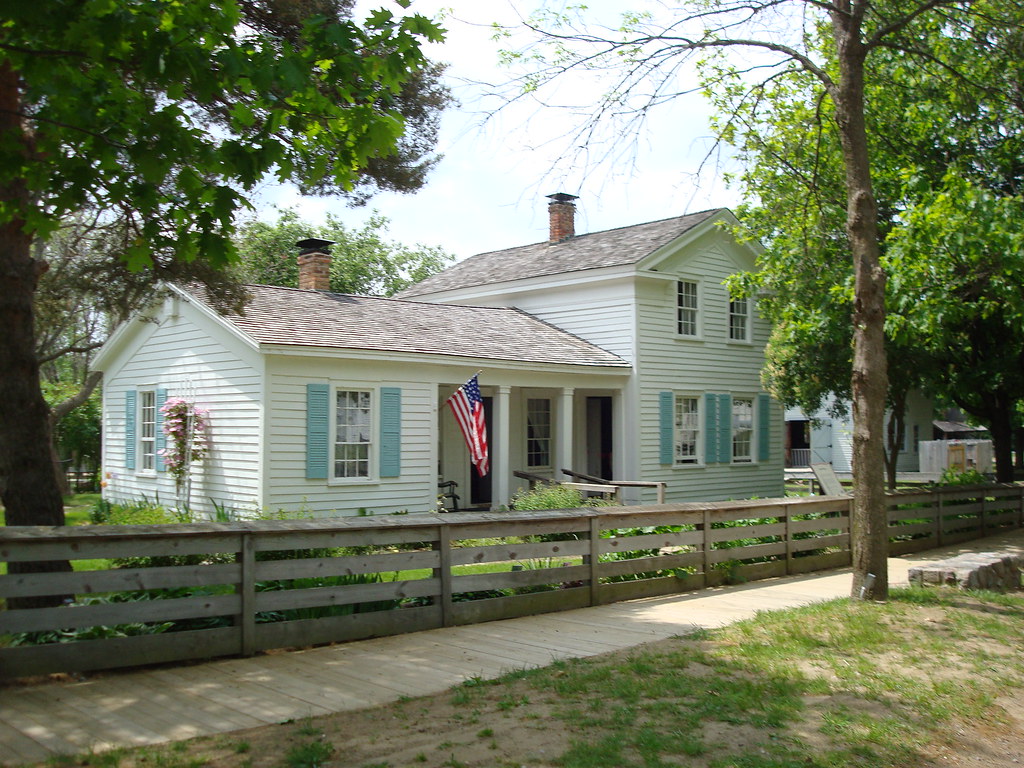
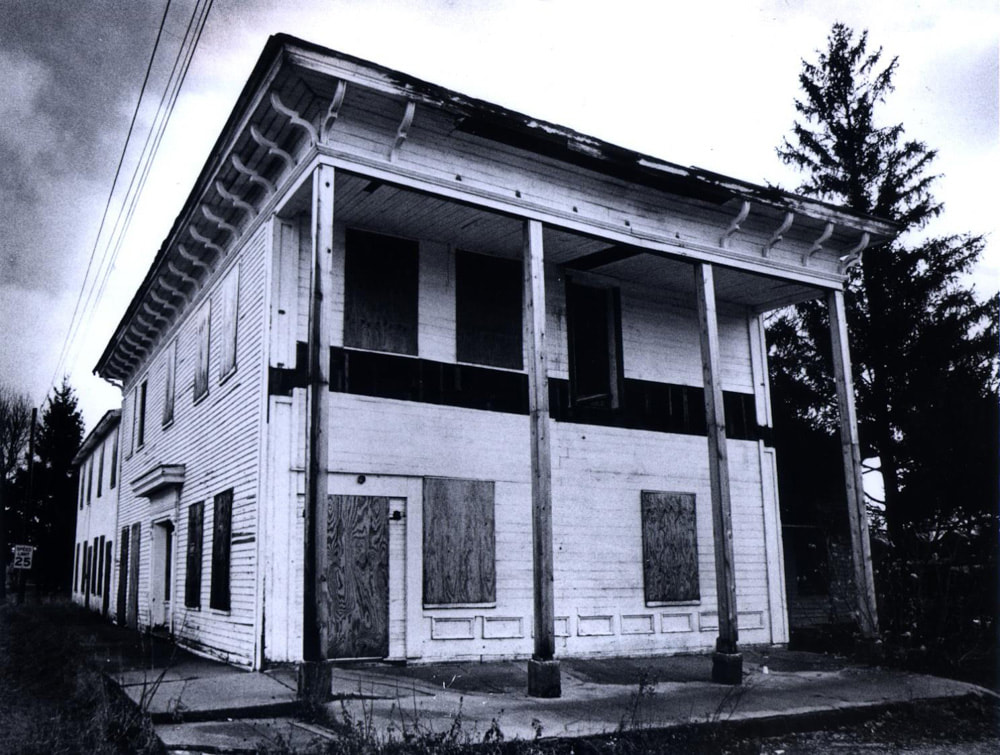
The Buzzell House, built in 1854; the oldest standing wood structure in Flint at the time of is removal to what became Crossroads Village
The Buzzell House

In 1967, the construction of I-475  highway meant that many historic structures would be demolished. This led to the Genesee County Parks and Recreation Commission granting $20,000 to move the first two buildings to a lot of land, donated by the C.S. Mott Foundation. Initially, it was only seen as a way to rescue the historic buildings. The first to be saved was The Buzzell House, which was built in 1854 by carpenter John Buzzell, for himself and his family. At the time of its relocation, it was the oldest standing wood structure in Flint. The residence was a very typical middle-class home of the mid 1800’s. The Buzzell House would be categorized as a Greek Revival style of architecture, having defining characteristics including a porch entry with columns, symmetrical windows set back from the columns, and plain cornices.
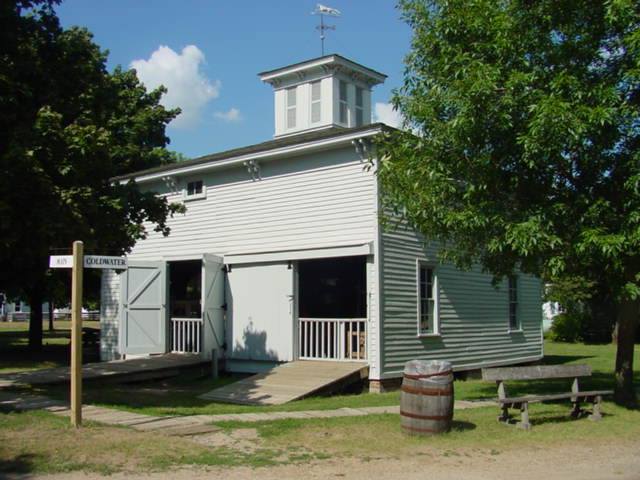
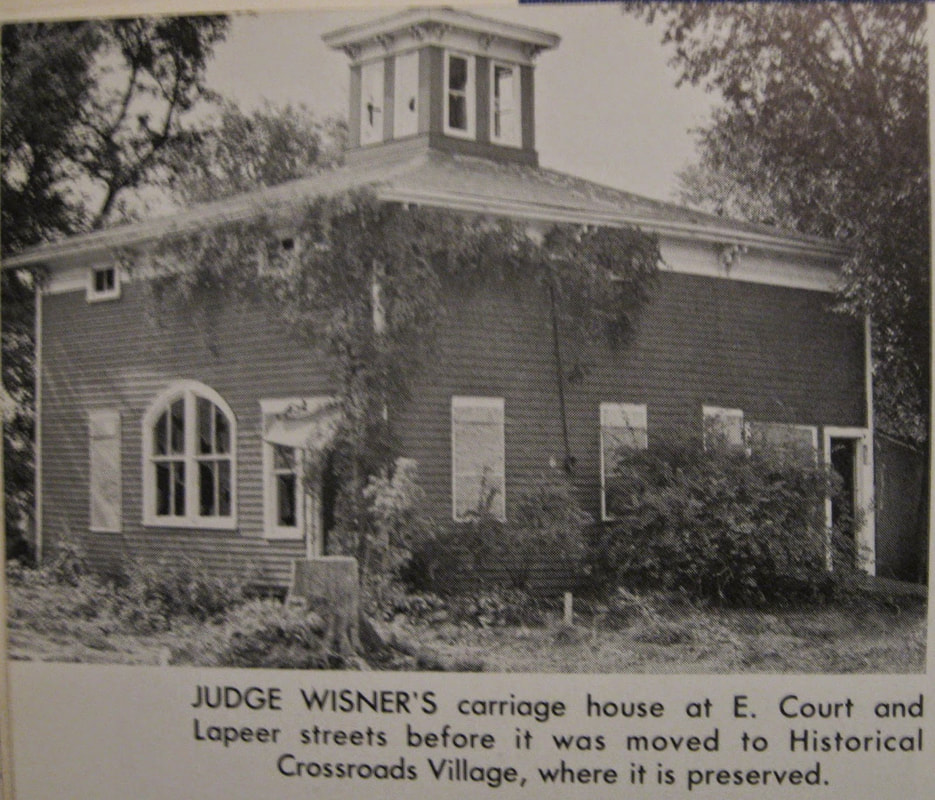
The Wisner Carriage House

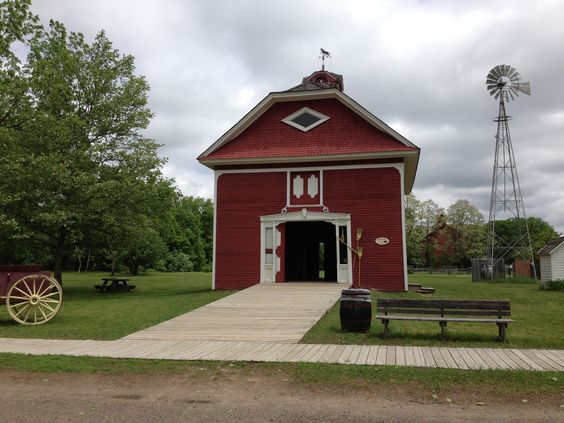
The other building to be saved with the grant was The Wisner Carriage House, which was built in 1878. It was built by Judge Charles H. Wisner to house a few of his horses and carriages. It was originally located in Flint, on the corner of East Court Street and Lapeer Street. What makes this carriage house particularly interesting?  Judge Wisner was the first person in Flint to own a car—which had no brakes and he built himself circa 1898—in the rescued building he used as a workshop.
Picture
The Wisner Carriage House as it looks today
Picture
​By December 1968, some people began to see potential in the relocating of these historic buildings. This is when John West and Stanley Mahaffy attended a Genesee County Board of Commissioners meeting and proposed to save more old buildings and re-assemble them as a museum. Many became engaged with the initial project, including our very own Genesee County Historical Society! Others who became involved included the Genesee County Parks and Recreation Commission, the Flint Beautification Commission, the Flint Housing Commission, the C.S. Mott Foundation, and many others. By the summer of 1973, the Genesee County of Board Supervisors gave funds to what was their Bi-centennial project, which is now known as Crossroads Village. Not long after, in 1974, the plan was officially approved and because of it, many historical treasures are still standing today. 
The Davison Depot
​
Picture
Picture
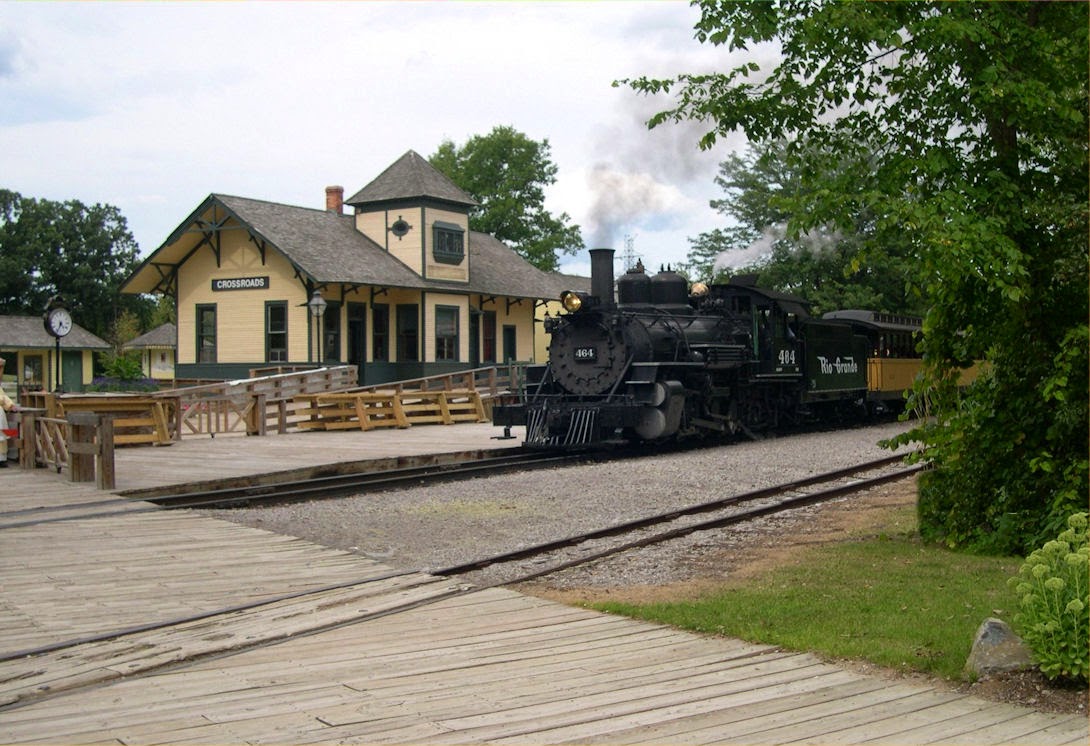
One of the most notable aspects of Crossroads village is of course the Huckleberry Railroad. All of the equipment, cars, and steam engines are originals and were saved and collected from all over the U.S. At the face of the village is the crossing of the Huckleberry Railroad and the Historic Davison Depot building. Originally from Davison, the Davison Depot was part of the Grand Trunk Line, built in the late 19th century. The Depot was accurately restored once relocated in 1974, even replicating its original paint colors. In its time of the late 19th century, Davison was a ‘Flag Stop,’ meaning that the train would only make a stop there if a passenger wanted to get off or on, for which case a flag would be placed, informing the engineer to stop.
Picture
The Grand Opening of Crossroads Village took place on July 4th, 1976. It was met by with very positive reception, as visitors got to experience their county’s history with buildings they had grown up with or were learning about for the first time. Since its opening, four generations have visited and enjoyed the charm of Genesee County’s living village.

As the success continued, more and more buildings were rescued, donated, and relocated to Crossroads Village. Thirty-four buildings and attractions have been placed on their grounds adding an invaluable amount of history to Genesee County. Along Main Street stands the Horton-Colwell Building, the Attica Hotel, the Bank Building, the Fowler Barber Shop, the Manwaring Building, and the Mason Tavern. 
Picture
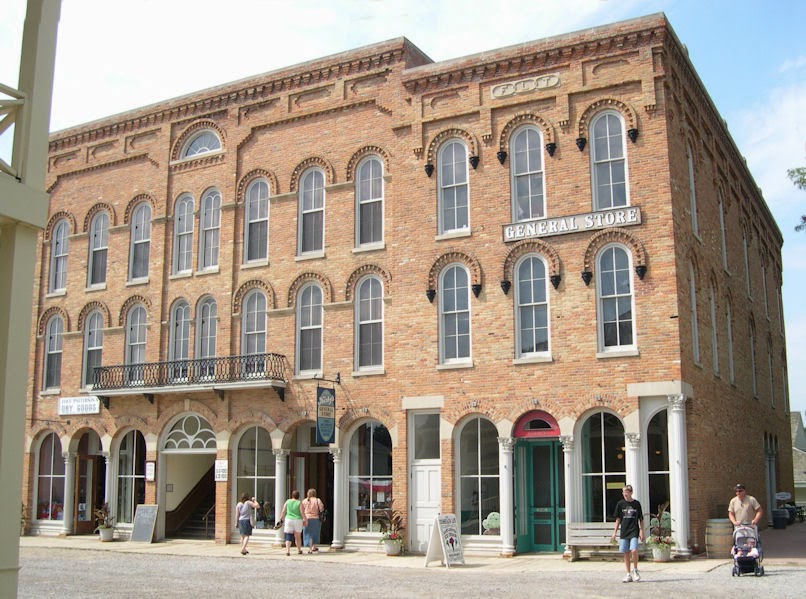
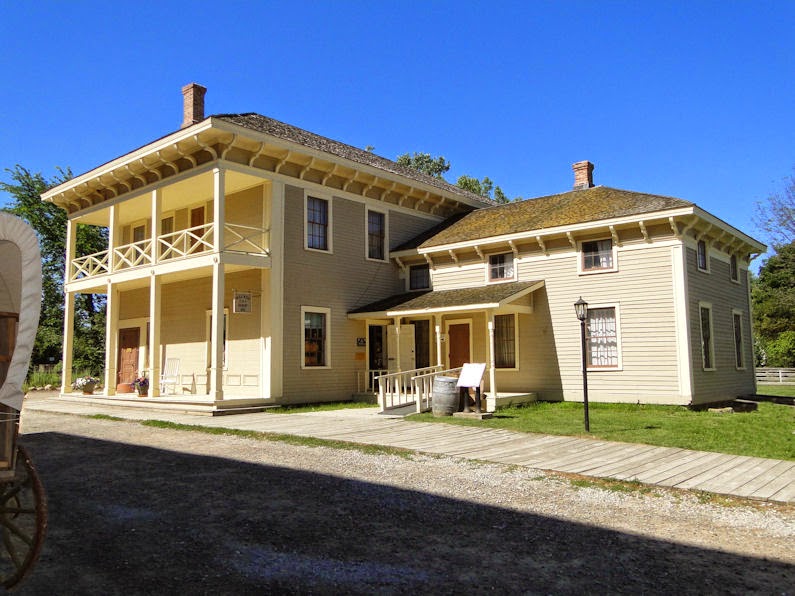
The Horton-Colwell Building from Fenton
The Horton-Colwell Building was built in Fenton, in 1869, by David Colwell and Dexter Horton. Until 1883, the first floor had served as a post office. The second floor, however, served many purposes including places of worship, schools, and fraternal organizations.  General Tom Thumb and Lily Langtree famously performed in the 2nd floor opera house. ​
Picture
The Mason Tavern
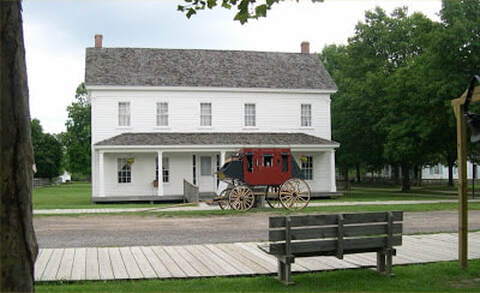
The Mason Tavern, built by Daniel Mason in 1850, served as an inn, tavern, and stagecoach shop.  It originally sat on the corner of Fenton Road, near the crossing of Grand Blanc Road.  From 1853 through 1871 it also housed the Mundy Township post office.  The arrival of the Flint and Pere Marquette railroad eventually spelled the end of it's purpose.  It then became a private residence until  it was moved to Crossroads Village.

The Attica Hotel, built in the early 1870’s, was originally known as the William’s House. Similar to the Buzzell House, the architecture style has been designated as Greek Revival and Colonial, which is defined by the porch entry, columns, symmetrical windows, and set back brick chimneys. William and Betsy Williams lived in the house, with their fourteen children, when they settled in Attica for their lumber business.
Picture
Picture
Picture
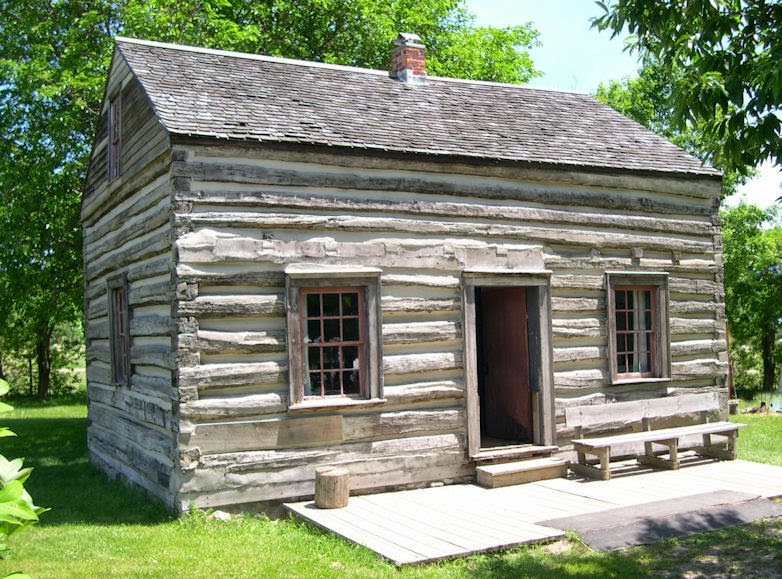
The oldest building on site, which was originally not from Genesee County, is the Salter Log House, built in Dearborn Township, in 1830. The cabin was owned by John and Elizabeth Salter, farming immigrants from Prussia (modern day Germany). In 1929, it was displayed at Greenfield Village. Its final location is now Crossroads Village, arriving there in 1995.

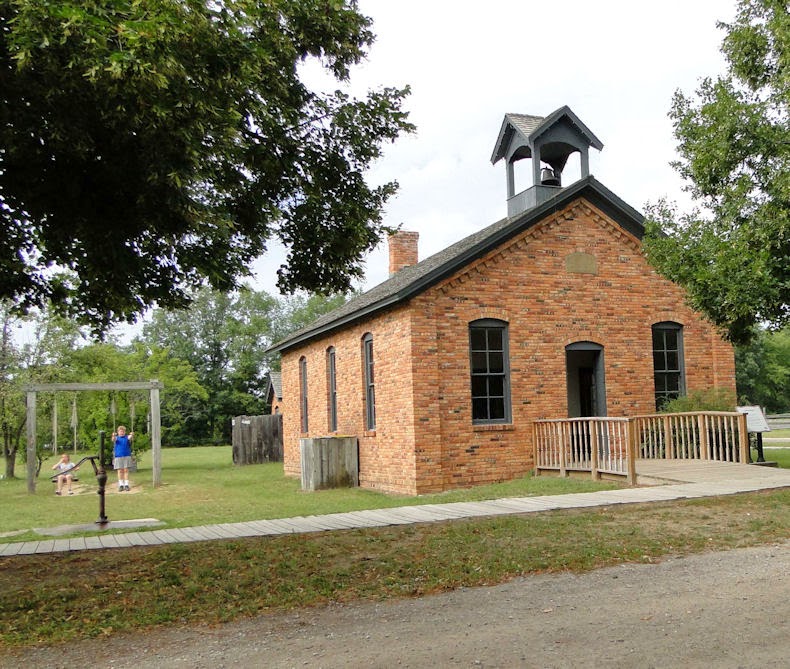
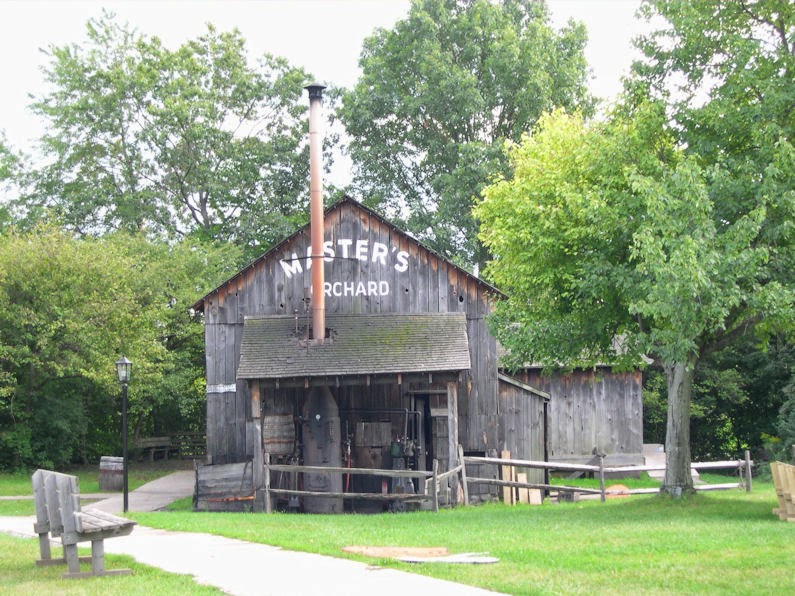
​Without Crossroads Village, these parts of our history would be gone. Generations have enjoyed this time capsule, as well as generations to come. From broom making at the Broom Barn, attending class at the Stanley School House, or having a delicious cup of homemade apple Cider at the Master’s Cider Mill, this village is an experience unlike any other. Crossroads Village is living history.

Picture
You can try your hand at broom-making at Broom Barn
Picture
See what it's like to attend class at the Stanley School
Picture
Taste a cup of real apple cider as it's made
Sources:
Buzzell House Image: https://www.flickr.com/photos/23723386@N07/3388312636/
Information: http://www.mycitymag.com/crossroads-village-huckleberry-railroadfour-decades-of-fun/
Information/ Images: http://passionforthepast.blogspot.com/2014/05/the-historical-structures-of-crossroads.html
The Wisner House Image: Crossroads Village & Huckleberry Railroad Facebook page
Information: http://crossroadsvillageofflintmichigan.blogspot.com/2008/09/clayton-township-hall.html
Information/ Image: https://www.crossroadsvillagecarousel.com/
https://buickman2.wordpress.com/2015/02/26/early-flint-automobiles/
“The Flint Journal Centennial Picture History of Flint” Gustin, Lawrence
Contributed by Bailey Ramirez

​About Bailey: 
Bailey is an architectural designer for a small firm, in Davison. She has a Bachelors of Architecture and is currently finishing up her Masters of Architecture from Lawrence Technological University. She is also a board member of the GCHS, serving on the society’s Preservation Committee.
Made possible with support from:
Picture
Picture
​This publication is made possible in part by a grant from Michigan Humanities, an affiliate of the National Endowment for the Humanities. Any views, findings, conclusions or recommendations expressed in this material do not necessarily represent those of the National Endowment for the Humanities or Michigan Humanities.

Picture
Picture
Picture
Picture
Programs sponsored by the Greater Flint Arts Council Share Art Genesee County Program made possible by the Genesee County Arts Education and Cultural Enrichment Millage funds.  Your tax dollars are at work!
​
And Our Members

Picture
xxx
Picture

Genesee County Historical Society
PO Box 21
​Flint, MI. 48502


Picture
  • Home
  • Explore
    • County Timeline
    • Our Stories
    • Links & Resources
    • Vintage Photos
  • Learn
    • About the Society
    • Preservation >
      • Ask the Archivist
      • Preservation Articles
    • Radio Show
    • "The Historian" Magazine Archive
  • Events
    • Upcoming >
      • Happy Birthday Billy 2025
    • Previous Events
  • Contribute
    • Volunteer
    • Financial Giving
  • Become a Member
  • The Market