GENESEE COUNTY HISTORICAL SOCIETY
  • Home
  • Explore
    • County Timeline
    • Our Stories
    • Links & Resources
    • Vintage Photos
  • Learn
    • About the Society
    • Preservation >
      • Ask the Archivist
      • Preservation Articles
    • Radio Show
    • "The Historian" Magazine Archive
  • Events
    • Upcoming >
      • Happy Birthday Billy 2025
    • Previous Events
  • Contribute
    • Volunteer
    • Financial Giving
  • Become a Member
  • The Market

SArah Emma Edmonds

PictureSarah Emma Evelyn Edmonds; public domain
Sarah Emma Edmonds  (1841 - 1898)

The Woman Warrior
​
The soldier, riding a mule, was carrying the mail from Washington to Centerville on the Second Battle of Bull Run, in Manassas, Virginia.  Taking a short cut from the intended route, the rider and beast were crossing a muddy, wet, wide ditch, when the animal reared, toppling into the rut headlong, tossing the passenger with force against the inside wall. Hooves sinking in the muck, the heavy mule worked desperately to liberate itself, in the process, injuring the stunned rider further.  Finally, as the sounds of cannons blasted the air, the soldier found the will to climb from the ditch, painfully creeping toward the waiting creature. Struggling to remount with a crippling leg injury and excruciating side pain, the Yankee regimental postmaster readjusted the mailbag, and with great urgency, rode toward the battlefield to make the important delivery. Once there, the soldier sought the doctor in the rear of the line, asking only for salve for the leg, making no report of the accident, though it became apparent that internal damage was causing hemorrhaging of a lung. Had it not been for the nursing and care of fellow friends, the soldier might have died.


Why not report the injury? Why suffer, risking death? Because the young, boyish soldier from Flint, Michigan, known as Franklin "Frank" Thompson, was in truth, a woman. She could not risk discovery in a medical examination of her lungs: she would have been dismissed from service, and treated as a criminal, as it was illegal for a female to disguise herself as a man, and to serve in the military.
Independent and with A strong will

Born Sarah Evelyn Emma Edmondson, in 1841, in rural New Brunswick, Canada, she was the youngest child of a French mother, Betsy, and a Scots and Irish, hardhanded, authoritarian father, Isaac, who held little value for females, treating them cruelly. “In our family the women were not sheltered but enslaved…”, she wrote. At fifteen, she was promised in an arranged marriage. As she related in article from the Fort Scott Weekly Monitor in 1884, "In obedience to orders, I became engaged, but while the preparations were going on for the wedding, one starless night, I most unceremoniously left for parts unknown."  Emma ran away from the family's potato farm, to a neighboring town, living with a family friend, while supporting herself working at a millinery shop.  However, soon she was discovered by her father, and in order to avoid his subjugation, she created a male persona, then “vanished”.
Picture
The Power of a Story
​

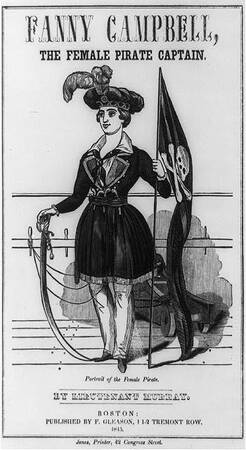
At the age of thirteen, an old, traveling peddler gave Emma a copy of Fanny Campbell, the Female Pirate Captain, a novel about a young adventuress who masquerading as a man, becomes a pirate to save her fiancé. She said after reading it, “I felt as if an angel had touched me with a live coal from off the altar….I went home that night with the problem of my life solved.”

Transformed: a new life

In her new disguise, she remained out of sight, in the woods during the day, traveling by night, until hunger drove her from hiding.  That was her moment of transformation, because when she revealed herself, she was unquestioned, accepted as a man, and treated with esteem.  She began working as a bookseller, eventually, making her way from Canada to Hartford, Connecticut, where she had found a lead on a publisher. Hurlburt, Williams & Co. hired her to sell Bibles, sending her to Nova Scotia, where she flourished.  After she was persistently pursued by a young woman with marriage in mind, she left the city, heading West.  
​​

fully committed

She traveled to Michigan, where she settled in faraway Flint, continuing to fully live under a male guise. War was declared in April of 1861, when she was 20-years-old, and she was conflicted. “But the great question to be decided, was, what can I do? What part am I to act in this great drama?”, she wrote in her 1864 memoir, Nurse and Spy in the Union Army. Within a month, she had passed the Army’s cursory physical—women were forbidden from serving—and enlisted in the United States Army, Company F, Second Michigan Volunteer Infantry Regiment, as a private, in the militia unit known as “Flint’s Union Greys.”
Picture
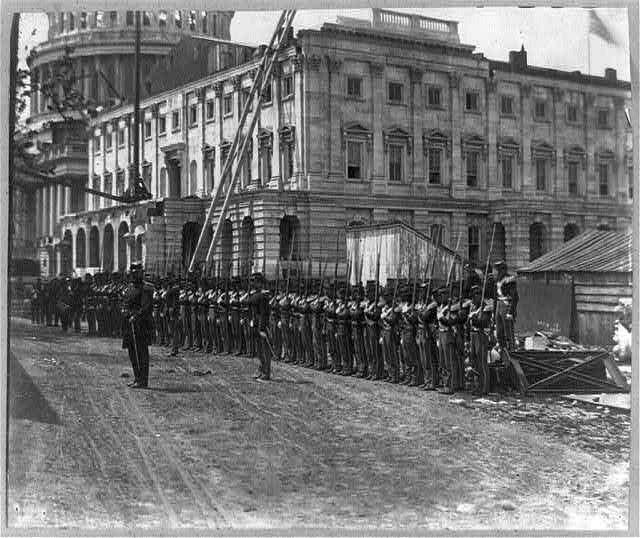
Troops drilling in front of US Capitol, May 13, 1861. (Courtesy Library of Congress)
“Frank” then boarded a train for Washington D.C., a city jammed with thousands of troops, encamped for miles around, drilling, practicing artillery, and building forts.  There he worked, inundated with nursing hordes of those sick with dysentery and typhoid, until his unit received its marching orders.  He partook in the 1st Battle of Bull Run, the Siege of Yorktown, Battle of Williamsburg, Battle of Fredricksburg, and the 2nd Battle of Bull Run, on occasion picking up a weapon against the Confederates, and barely evading capture when tending to the battlefield wounded. Throughout his two years soldiering, he acted as mail carrier, field nurse which included carrying for the wounded and burying the dead, an aide-de-camp for Colonel Orlando M. Poe, and purportedly, eleven times as a spy, crossing into enemy lines under different disguises. 

One Soldier Who Knew the Truth

Picture
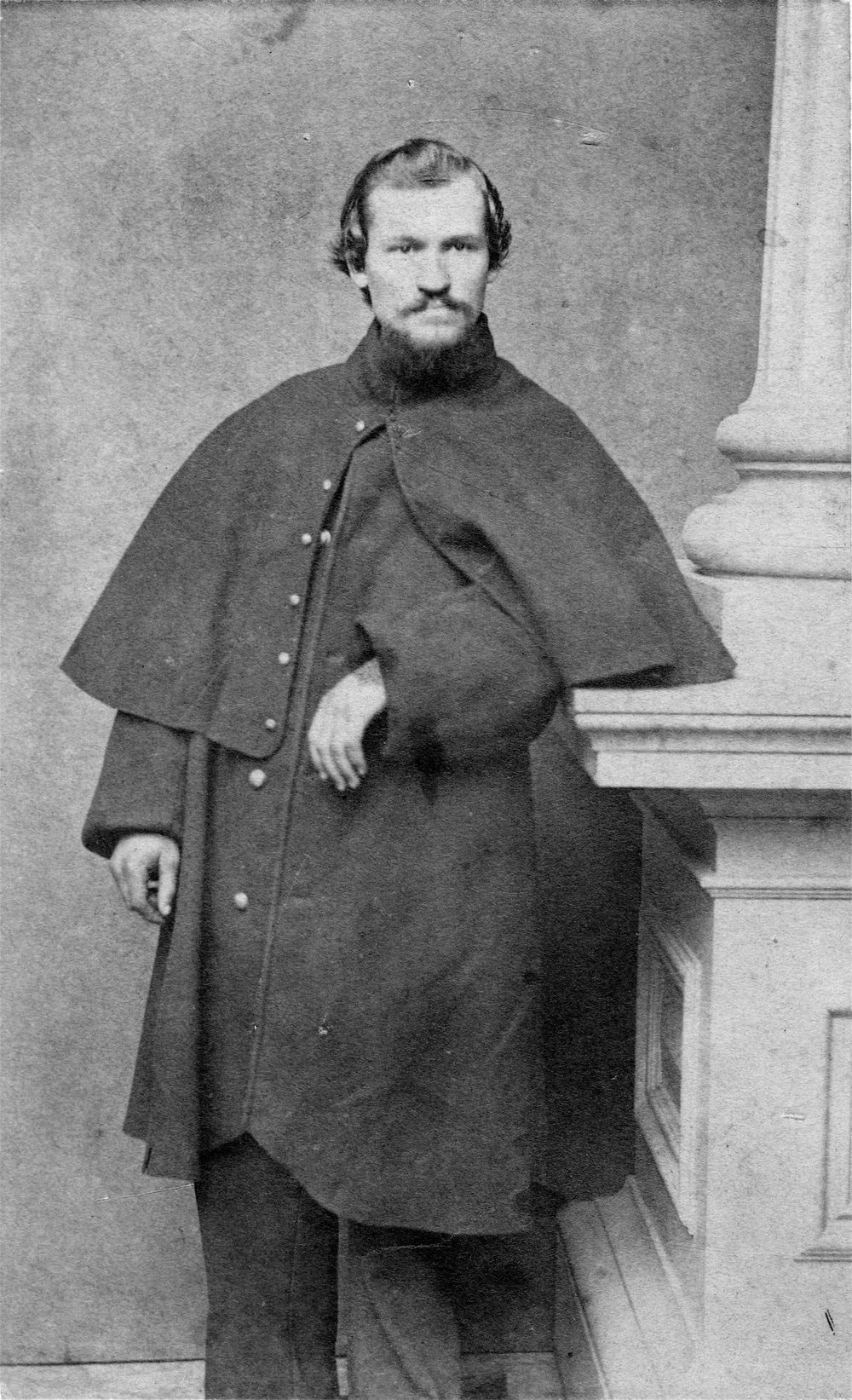
Jerome John Robbins, circa 1861, taken in Washington, D.C.; public domain
Jerome John Robbins and "Frank" met early on, while in Washington, D.C., working in the Capitol's hospitals, and quickly became friends.  Robbins was also a member of United States Army, Second Michigan Infantry, but in Company I.  After "Frank" revealed his true identity, the friendship became extremely strained.  Robbins wrote about "Frank" in his diaries and they continued to exchanged some letters.  Jerome served out his time in the Army, being captured once.  After the war, he went on to obtain a received his diploma as a Doctor of Medicine from the University of Michigan, in 1867.

He never revealed Emma's identity.
Picture
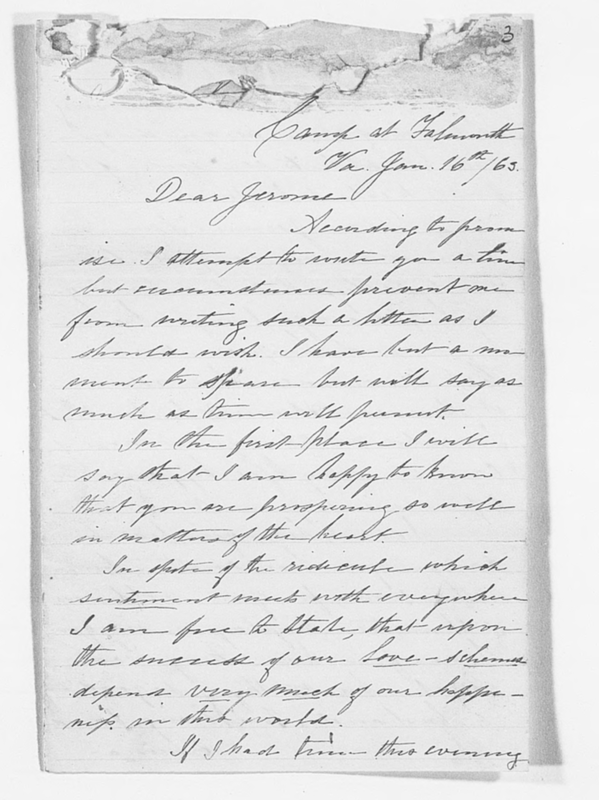
Letter from Emma to Jerome (Bentley Historical Library Civil War Collections Online); Click for link
During excursions in the swamps of the Chickahominy, in Virginia, Frank contracted malaria. He fought his illness, resolutely performing the duties of his positions, until April of 1863 when his company was in Barstown and Lebanon, Kentucky, and he became overwhelmed by his chills and fevers. Rather than seek medical attention at the military’s infirmary, which would have resulted in discovery, he asked for leave, which was rejected, forcing him to check into a private hospital in Oberlin, Ohio. When well, Frank discovered he was labeled a deserter, which was punishable by death.

There was no choice, but to leave Frank Thompson behind. 

​So ended the secret career of Sarah Emma Edmonds.
Picture
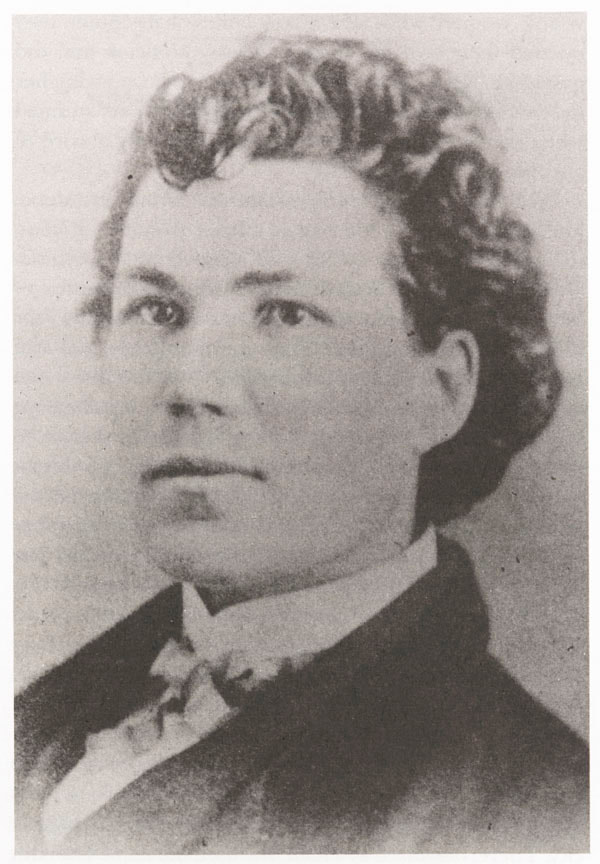
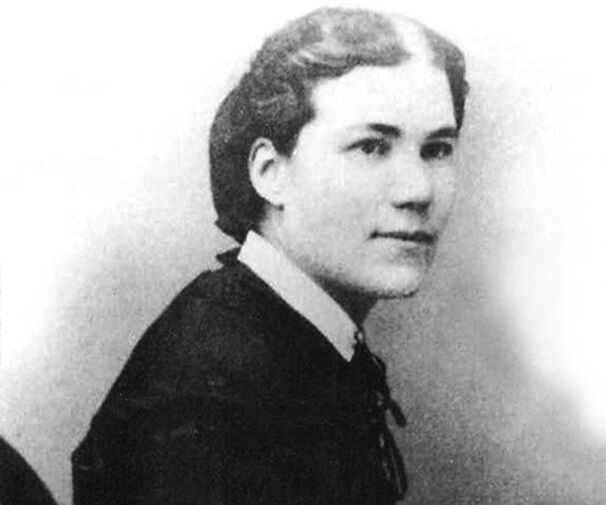
Emma's portrait as Frank; public domain
Picture

Still dedicated to the Cause

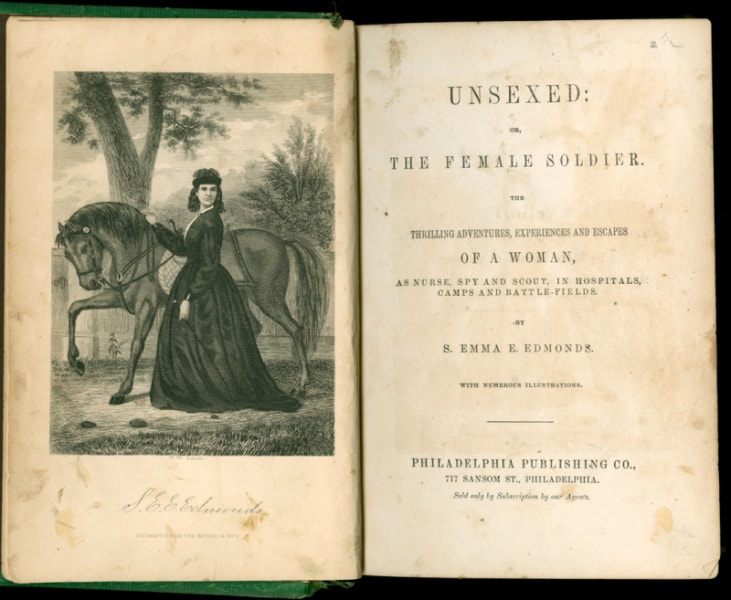
As a female, she went back to her publishers in Hartford, Connecticut, and with their assistance, wrote her anonymous memoir, A Nurse and Spy in the Union Army, selling over 175,000 copies, second only to Uncle Tom's Cabin.  She donated all proceeds donated to soldiers’ aid causes, the Sanitary Commission, and the Christian Commission, for war aid.

Emma then returned to nursing, though not on the battlefield, working for the Christian Commission, tending the wounded and ill from Harpers Ferry to Clarksburg, West Virginia for the remainder of the war.

A different life

When the South conceded, Emma traveled back to Oberlin, Ohio, to attend college, only for a short time, as she found it "too monotonous", after all she had experienced.  She made a trip back to New Brunswick to visit her siblings (her parents had died), afterwards returning to Ohio, where she reunited with Linus H. Seely, a carpenter, and New Brunswick, Canada transplant. They had met in Harper's Ferry, when she was working as a female nurse. They wed in Cleveland, in 1867, had three children, who did not live past their youth, and adopted two sons.  Like so many people of the day, their restless spirits continued to drive them to move, from Ohio, to Louisiana, to Kansas, and finally to Texas.  By her own account, in the January 17, 1884 article from the Fort Scott Weekly Monitor of Fort Scott Kansas, "In 1867 I was married to L. H. Seelye, of Saint John, N.B., whose love and tender care still bless my declining years."
“Well, you know how the census takers sum up all our employments with the too easily written words ‘married woman’. That is what I became; and of course that tells the entire story.”

--Emma E. Seelye


Finally, asking for help

Picture
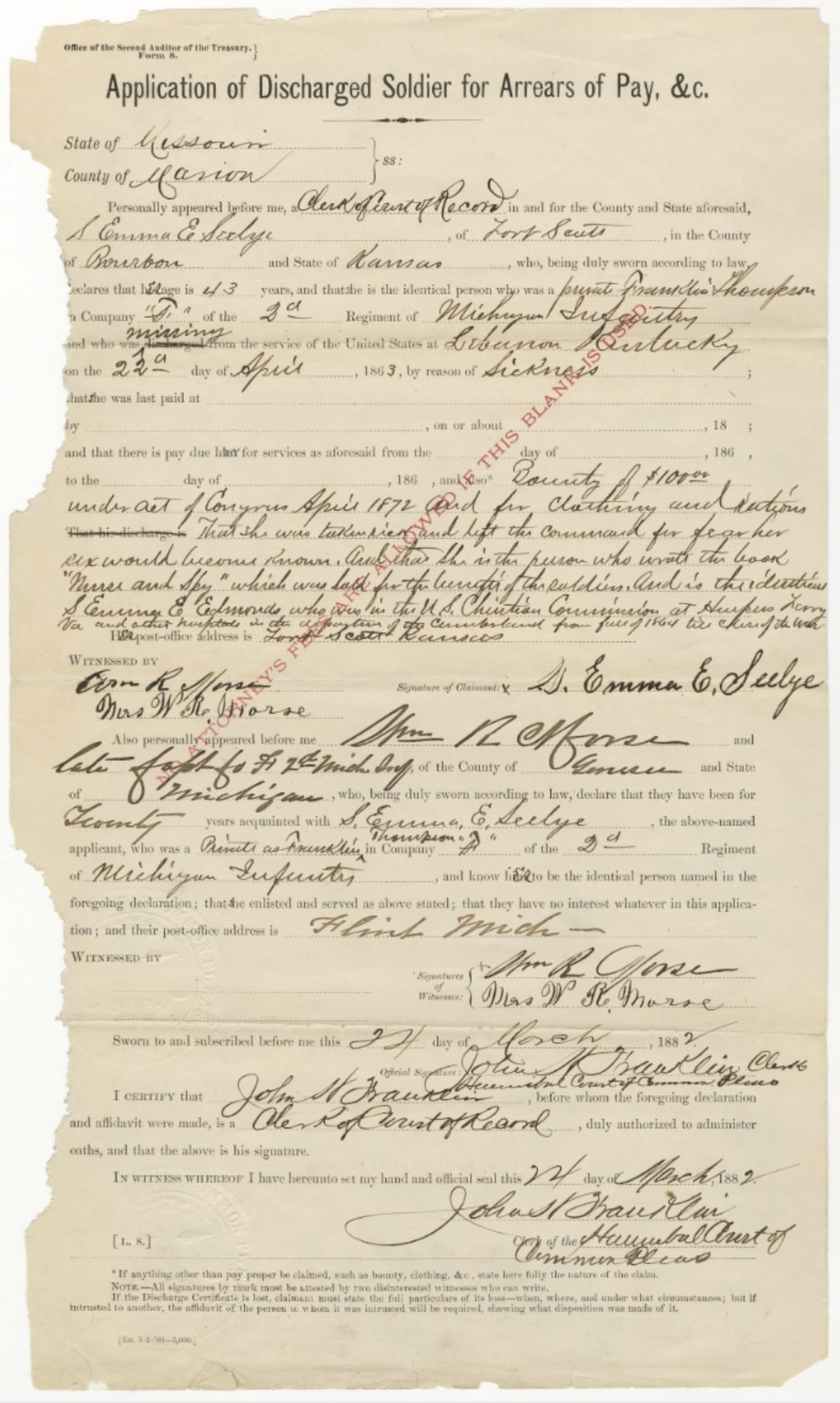
Emma's pension application, courtesy of the National Archives
She had not pursued remuneration after the war, as she explained, “not because I thought it impossible to obtain one, but simply because I love independence too well to willingly become a pensioner on the bounty of anyone—even dear old Uncle Sam.” But, eventually, her wartime maladies became extraordinary, and in 1884, due to financial hardship, she began the process to apply for a military pension.  
Picture
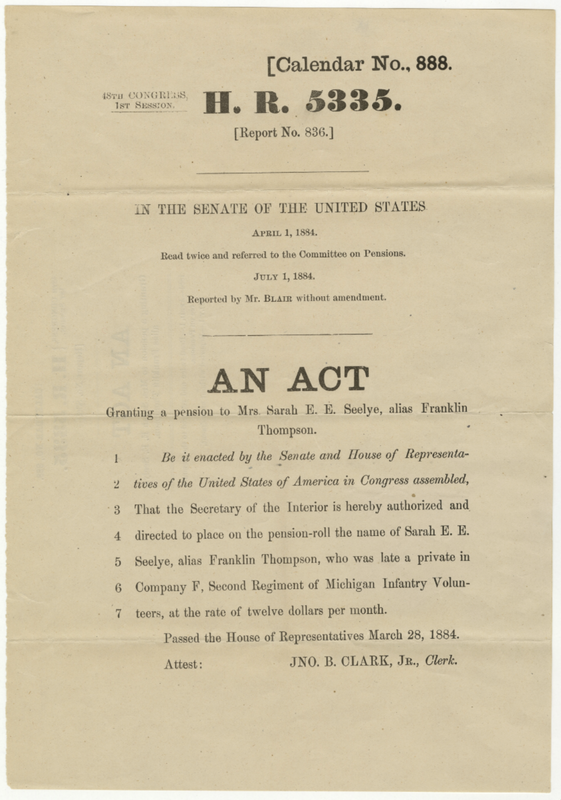
File Unit: Accompanying Papers from the 49th Congress, 1885 - 1887. Series: Accompanying Papers, 1865 - 1903. Record Group 233: Records of the U.S. House of Representatives, 1789 - 2015
With such a peculiar situation, in order to prove her identity, extra effort was required, and she relied on written affidavits from the men who she served with, as well as from her publisher, Mr. Hurlbert.  Returning to Flint, she visited Damon Stewart, her old tent mate, in his hardware shop.  After a shocking re-introduction, Mr. Stewart hosted her in his home for a week, where many members of her unit paid visits.  Several of them provided written affidavits of her case, which she provided to Congress, along with her pension application.

The support she received to prove “Frank” was truly “Emma”, and to drop the desertion charges, her pension was approved by Congress. She is considered the only known woman to have received a Civil War pension, and to have been mustered into the Grand Army of the Republic, a fraternal order of Union veterans.

Honored Hero

Picture
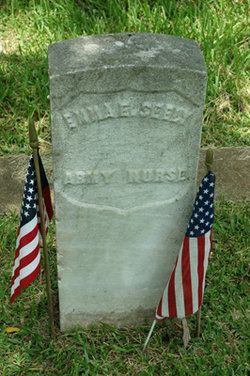
Headstone of Emma E Seelye, courtesy of findagrave.com
​Emma did not live long past the award, passing away on September 5, 1898 from her illnesses, in La Porte, Texas.  Three years after her death, at the request of her fellow GAR veterans, her remains were disinterred and moved to the GAR military cemetery, in Washington Cemetery, where she was honored and buried as a Union veteran.

Sources:
  • Fort Scott Weekly Monitor, Fort Scott Kansas, 17 Jan 1884, Thu, pg 6
  • Letters from Sarah Emma Edmonds (alias Frank Thompson), https://quod.lib.umich.edu/b/bhlcivilwar/2011410.0011.001?view=toc
  • Gutenburg.org, Nurse and Spy in the Union Army, online free version:  https://www.gutenberg.org/files/38497/38497-h/38497-h.htm
  • ​Michigan in Letters, http://www.michiganinletters.org/2009/07/sarah-emma-edmonds-seelye_17.html
  • ​Application of Sarah Edmond Seelye National Archives, Today's Documents;  https://todaysdocument.tumblr.com/post/613474540701564928/application-of-sarah-emma-edmond-seelye
  • Women Soldiers of the Civil War, Part 2, National Archives: https://www.archives.gov/publications/prologue/1993/spring/women-in-the-civil-war-2.html
  • An Episode of the War, Miss Edmund's Career as a Book Agent, Soldier, and Spy, The New York Times, May 30, 1886
  • The “So Very Peculiar” Case of Sarah Seelye; Archives, March 20, 2020, https://history.house.gov/Blog/2020/March/3-20-SarahSeelye/​
  • https://www.battlefields.org/learn/biographies/sarah-emma-edmonds​
  • Sarah Emma Edmunds, American Battlefield Trust; https://www.battlefields.org/learn/biographies/sarah-emma-edmonds
  • ​https://www.findagrave.com/memorial/6843300/sarah-emma-seelye
Made possible with support from:
Picture
Picture
​This publication is made possible in part by a grant from Michigan Humanities, an affiliate of the National Endowment for the Humanities. Any views, findings, conclusions or recommendations expressed in this material do not necessarily represent those of the National Endowment for the Humanities or Michigan Humanities.

Picture
Picture
Picture
Picture
Programs sponsored by the Greater Flint Arts Council Share Art Genesee County Program made possible by the Genesee County Arts Education and Cultural Enrichment Millage funds.  Your tax dollars are at work!
​
And Our Members

Picture
xxx
Picture

Genesee County Historical Society
PO Box 21
​Flint, MI. 48502


Picture
  • Home
  • Explore
    • County Timeline
    • Our Stories
    • Links & Resources
    • Vintage Photos
  • Learn
    • About the Society
    • Preservation >
      • Ask the Archivist
      • Preservation Articles
    • Radio Show
    • "The Historian" Magazine Archive
  • Events
    • Upcoming >
      • Happy Birthday Billy 2025
    • Previous Events
  • Contribute
    • Volunteer
    • Financial Giving
  • Become a Member
  • The Market